
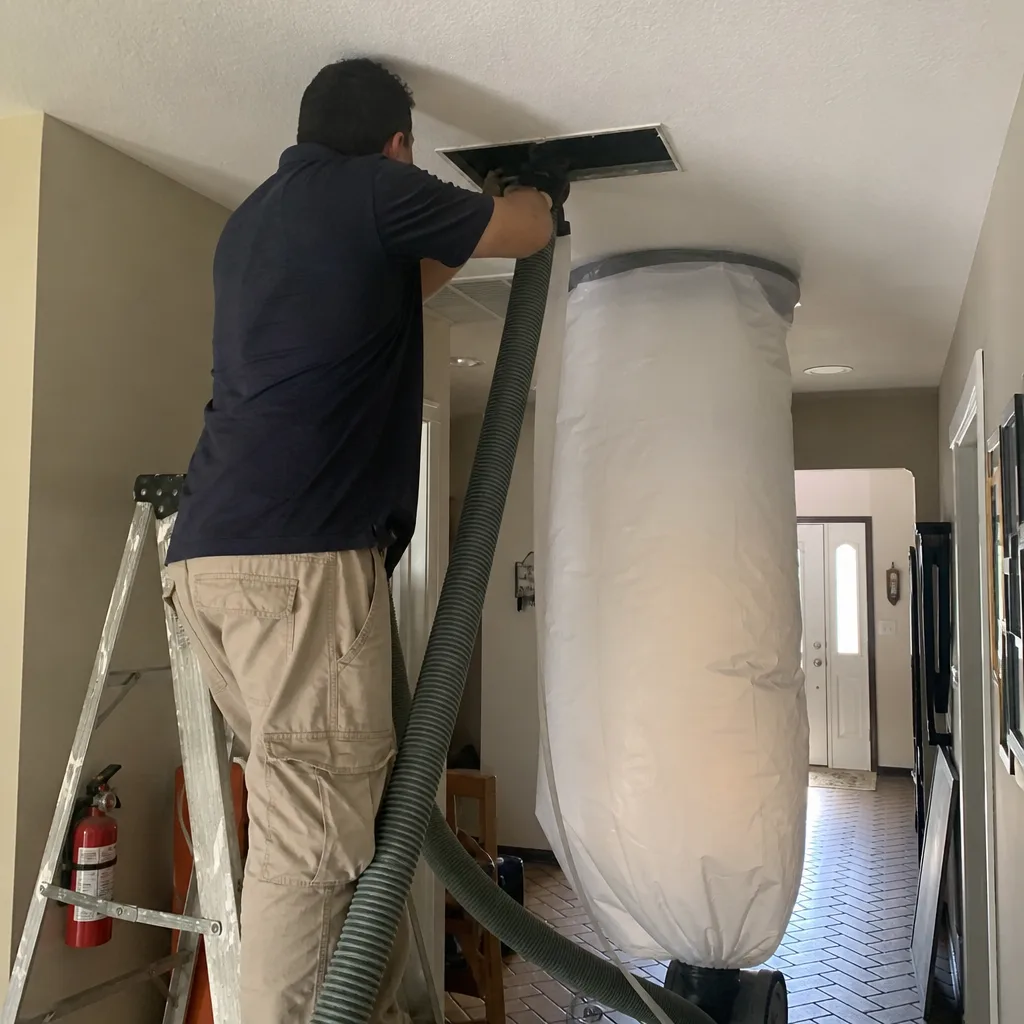
Last updated November 23, 2026
 Whole-home duct cleaning
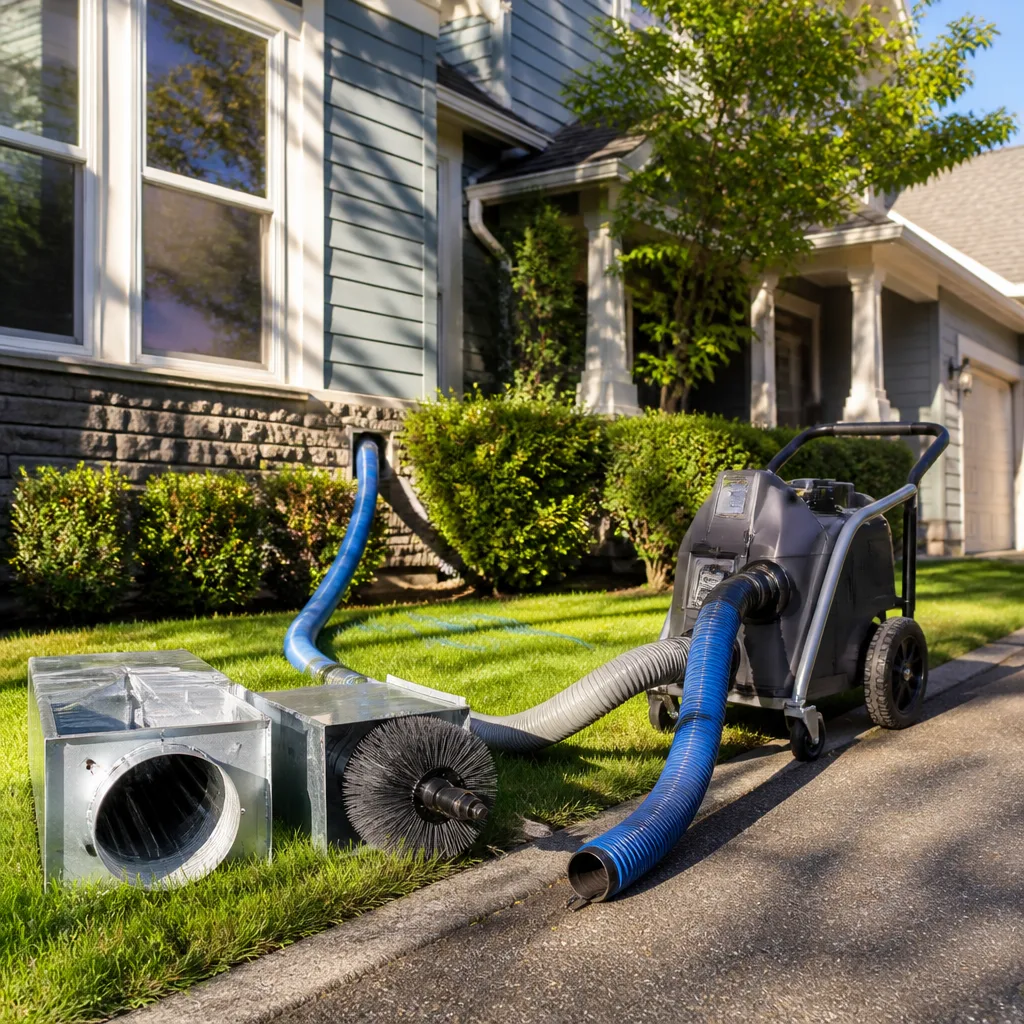
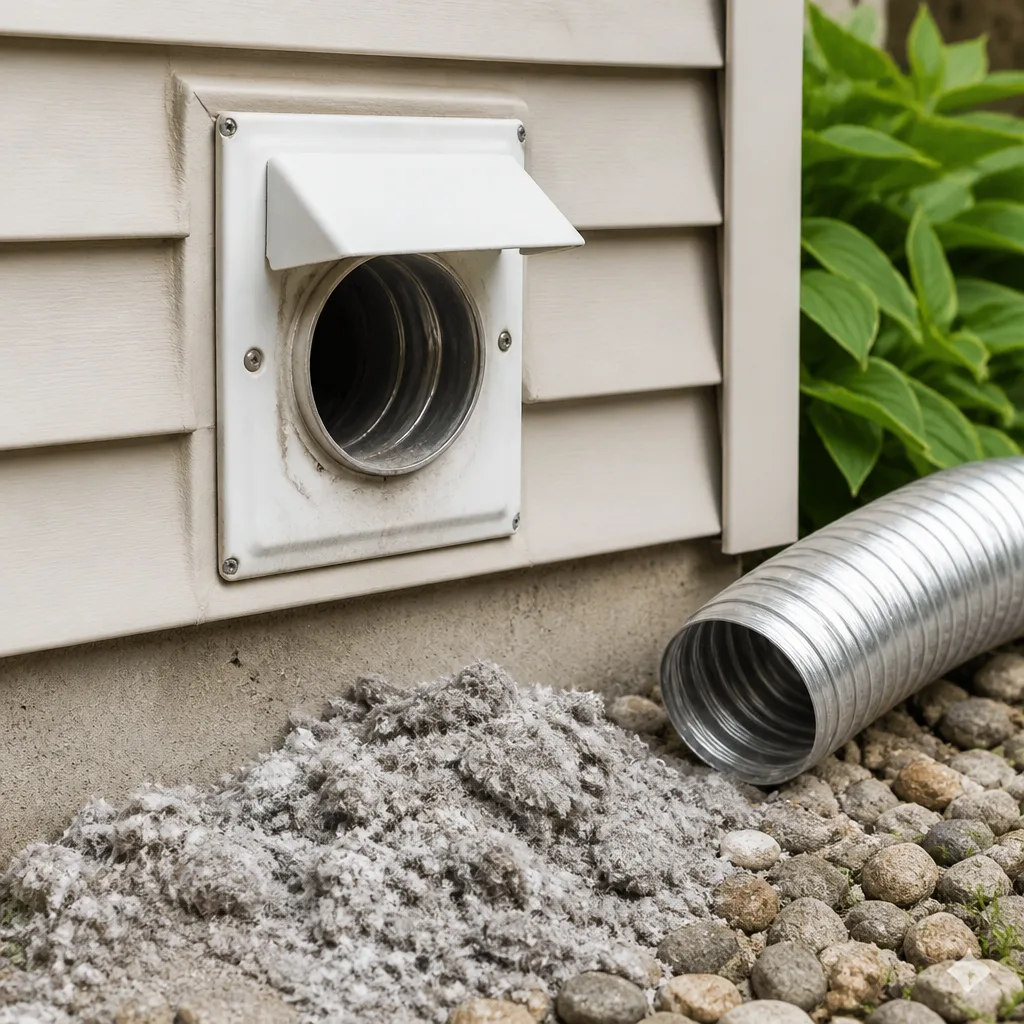 Dryer vent cleaning
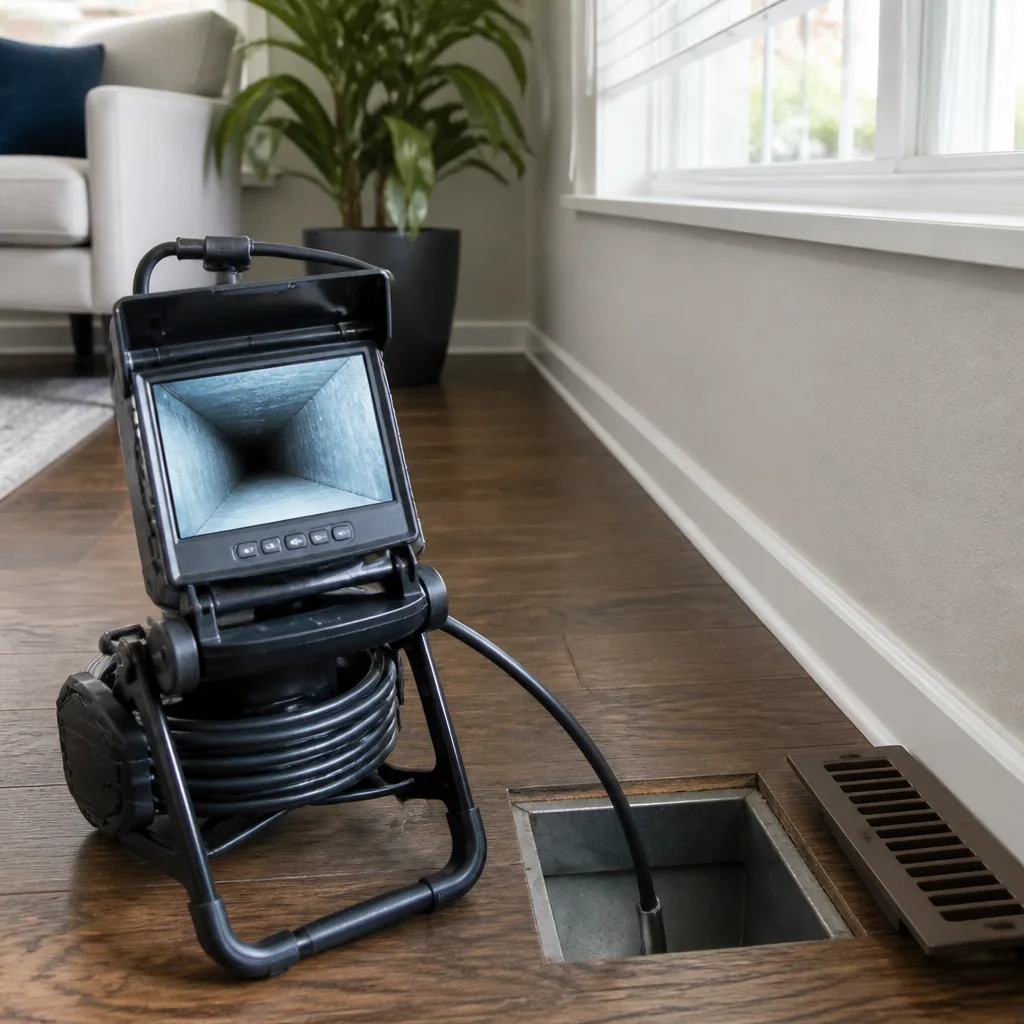 Camera inspection
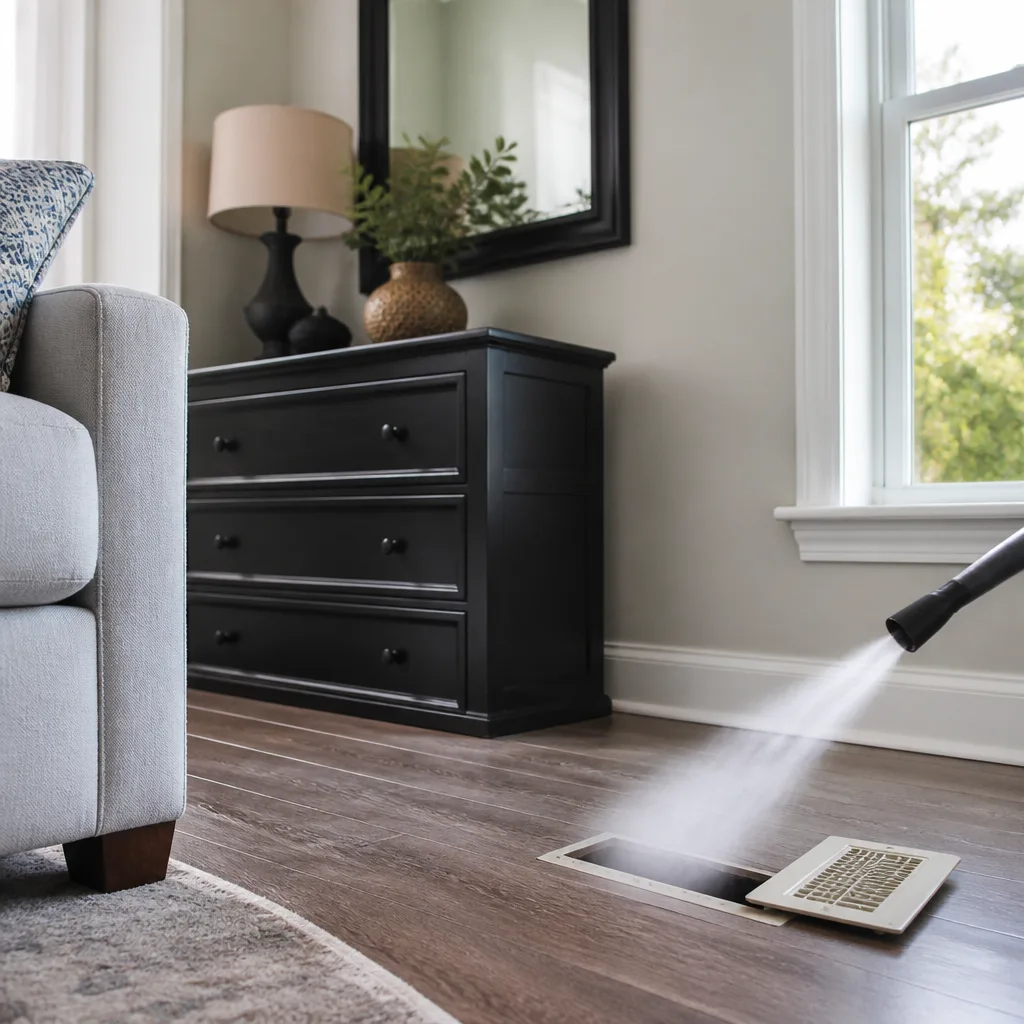 Sanitizing & deodorizing
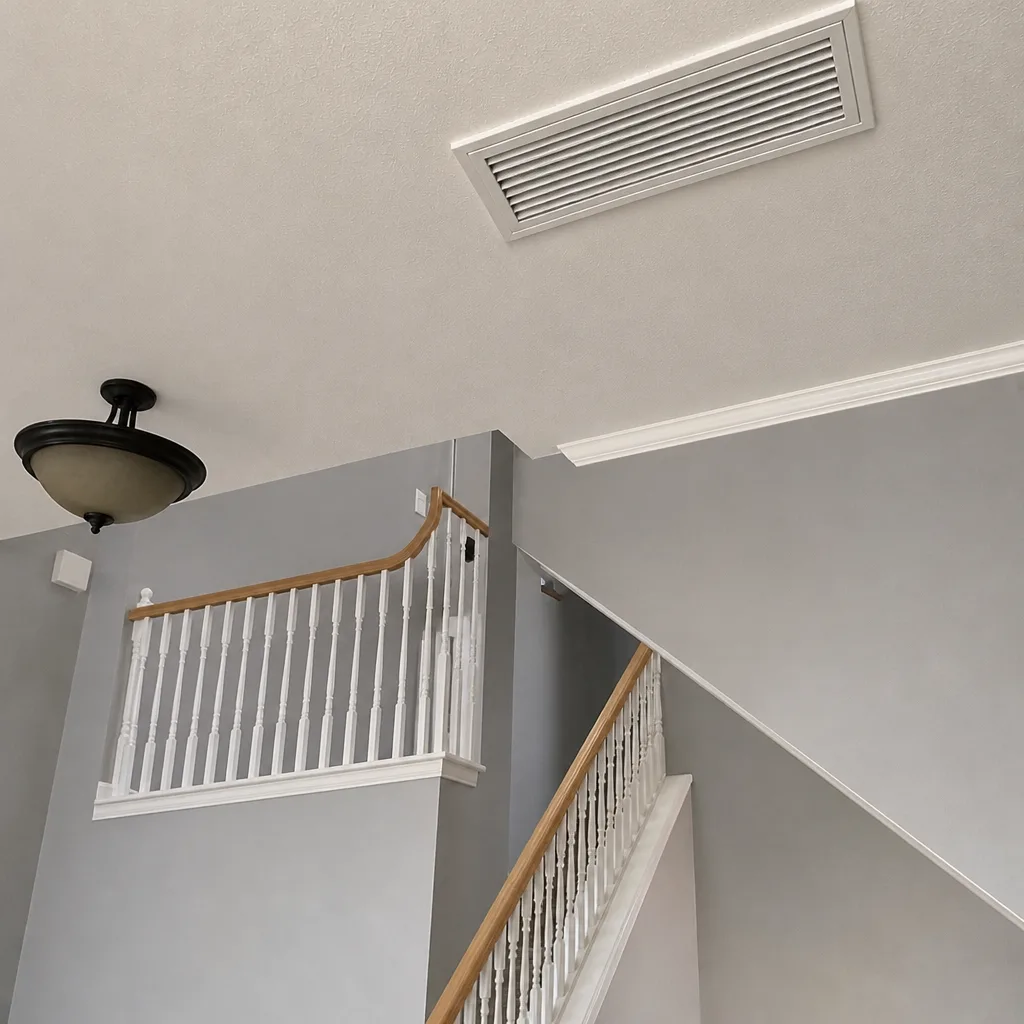
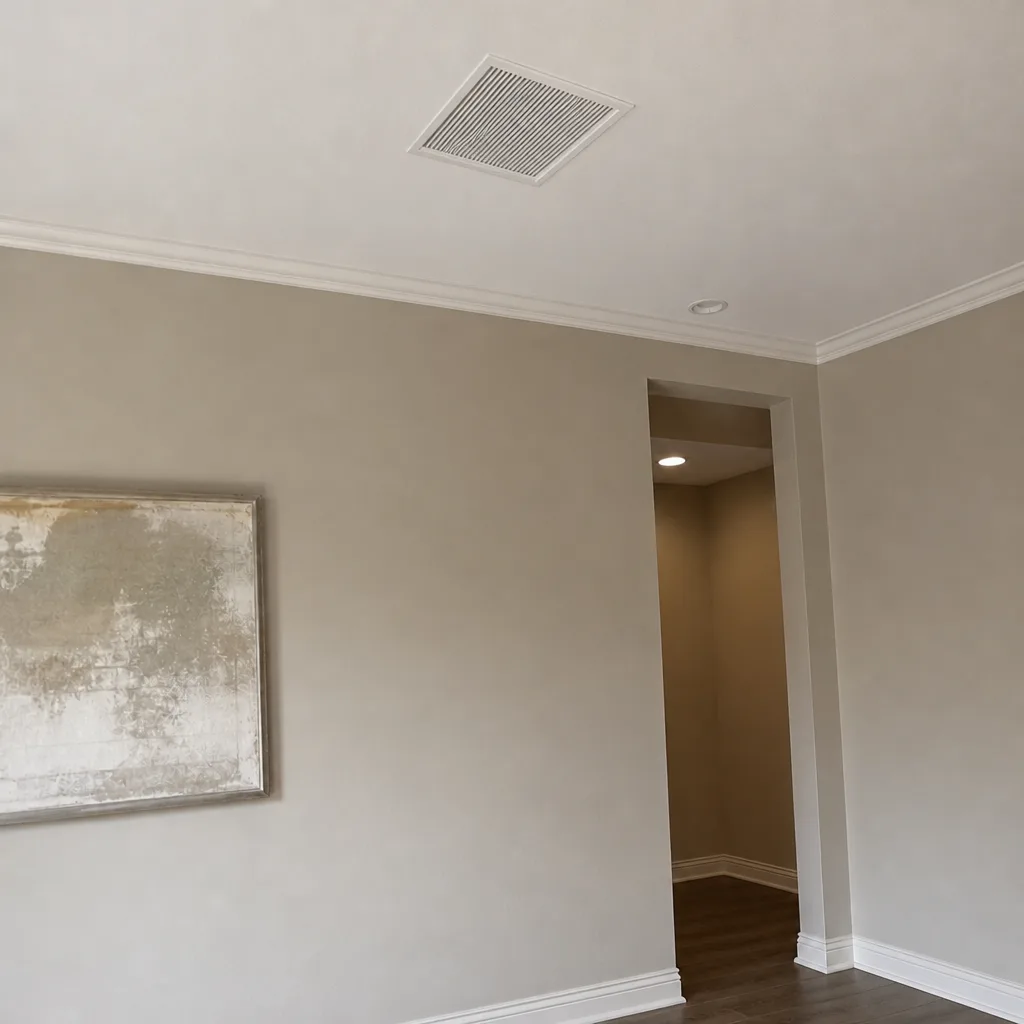
Whole-system duct and dryer vent check with before-and-after photos - you see exactly what came out of your vents
That "$99 whole-house special" is a bait ad - the real number appears once they are in your hallway, or the "clean" is a shop-vac at the register. We photograph the inside of your ducts before and after instead.
DIY vs Professional Air Duct Cleaning: The Far North Dallas Homeowner’s Decision Guide
A decent shop vac can clean the first few feet of ductwork behind each register, and that work isn’t wasted. But the contamination that actually drags on system performance – the caked debris eight to fifteen feet into a duct run, the buildup on the plenum, the dust packed against the evaporator coil – sits exactly where a shop vac hose stops and professional agitation equipment begins. That’s not a scare line invented to sell a service. It’s a physical limit of reach, suction, and containment, and it’s the line this guide draws for you. We’ll cover what you can genuinely handle yourself in a Far North Dallas home, what you can’t, what a real tool setup would cost if you tried to match it, and how to combine the two so the money you spend on professional work lasts.
Quick Answer
DIY air duct cleaning works well for register covers, return grilles, accessible dryer vent lint, and filter upgrades. Professional cleaning is the right call when debris has built up mid-run or in the plenum, when you can see dust blowing from supply vents, or after a renovation. The two aren’t in competition. Most Far North Dallas homes get the best result from doing the surface work yourself and bringing in commercial-grade equipment for the deep cleaning.
Styles & brands we work with
- Whole-home duct cleaning
- Dryer vent cleaning
- Camera inspection
- Sanitizing & deodorizing
Table of Contents
- What DIY Air Duct Cleaning Actually Handles Well
- Where DIY Physically Stops: Mid-Run, Plenum, and Coil
- The Containment Problem: Why Loosening Debris Can Make Things Worse
- Tool Reality Check: What Matching Pro Equipment Would Cost
- Far North Dallas Factors That Change the Calculation
- The Hybrid Approach: DIY Between Professional Cleanings
- How to Evaluate a Professional Duct Cleaning Quote
- Common Mistakes to Avoid
- When to Call a Professional
- Frequently Asked Questions
What DIY Air Duct Cleaning Actually Handles Well
Start here, because too many guides skip the honest part. Several duct-adjacent tasks are well within reach for a homeowner with basic tools, and doing them yourself is a legitimate choice, not a compromise.
Register covers and supply vents
The grille on every supply vent collects dust on the fins and around the frame. Pop it off, wash it in a utility sink or outside with a hose, dry it fully, and screw it back. Ten minutes per register. On a two-story Far North Dallas home with a dozen or so registers, that’s an afternoon. Do this a couple of times a year and the visible dust load in the room drops noticeably.
Return grille and filter housing
The return pulls far more air than any supply, which means it also pulls far more dust. Wipe the return grille face and vacuum the filter housing with a brush attachment before you slide in a new filter. This is the single highest-value DIY habit on the list.
Filter upgrades
Moving from a basic fiberglass filter to a pleated filter with a higher MERV rating is a real improvement, and it’s a task anyone can do. Just don’t overdo it. A filter rated higher than your blower can handle strangles airflow and puts stress on the system. Check what your air handler is designed for before you buy.
Accessible dryer vent lint
Pull the dryer out, disconnect the flex section, and clean the lint that’s accumulated at the back of the dryer and in the short run behind it. This is straightforward and worth doing regularly. What you can’t reach is the long rigid run inside the wall and the exterior termination – more on that below.
None of these tasks require a special truck or a technician. They’re the right starting point, and they extend the time between professional cleanings.
Where DIY Physically Stops: Mid-Run, Plenum, and Coil
Here’s where the honest line sits. A consumer shop vac hose is rigid enough to push a few feet into a straight run and flexible enough to bend around one gentle elbow. Beyond that, geometry beats it.
- Mid-run debris: Eight to fifteen feet in, duct runs typically have elbows, takeoffs, and transitions. Dust and debris settle at each of those points. A shop vac hose can’t reach them, and even if it could, the suction drops off sharply with distance and hose length.
- The plenum: The plenum is the large box above the air handler where the trunk lines branch off. It collects a heavy layer of dust because it’s the pressure transition point in the system. There’s no register into it. Reaching it means opening the system at the air handler with the right tools and containment.
- Evaporator coil surfaces: The coil sits downstream of the filter and upstream of the supply trunk. Dust that gets past the filter coats the fins, and a coated coil loses efficiency. Cleaning it requires access to the coil cabinet and a method that doesn’t bend the fins.
- Branch takeoffs and dampers: Volume dampers inside the trunk create ledges where debris piles up. You can’t see them from a register, let alone reach them.
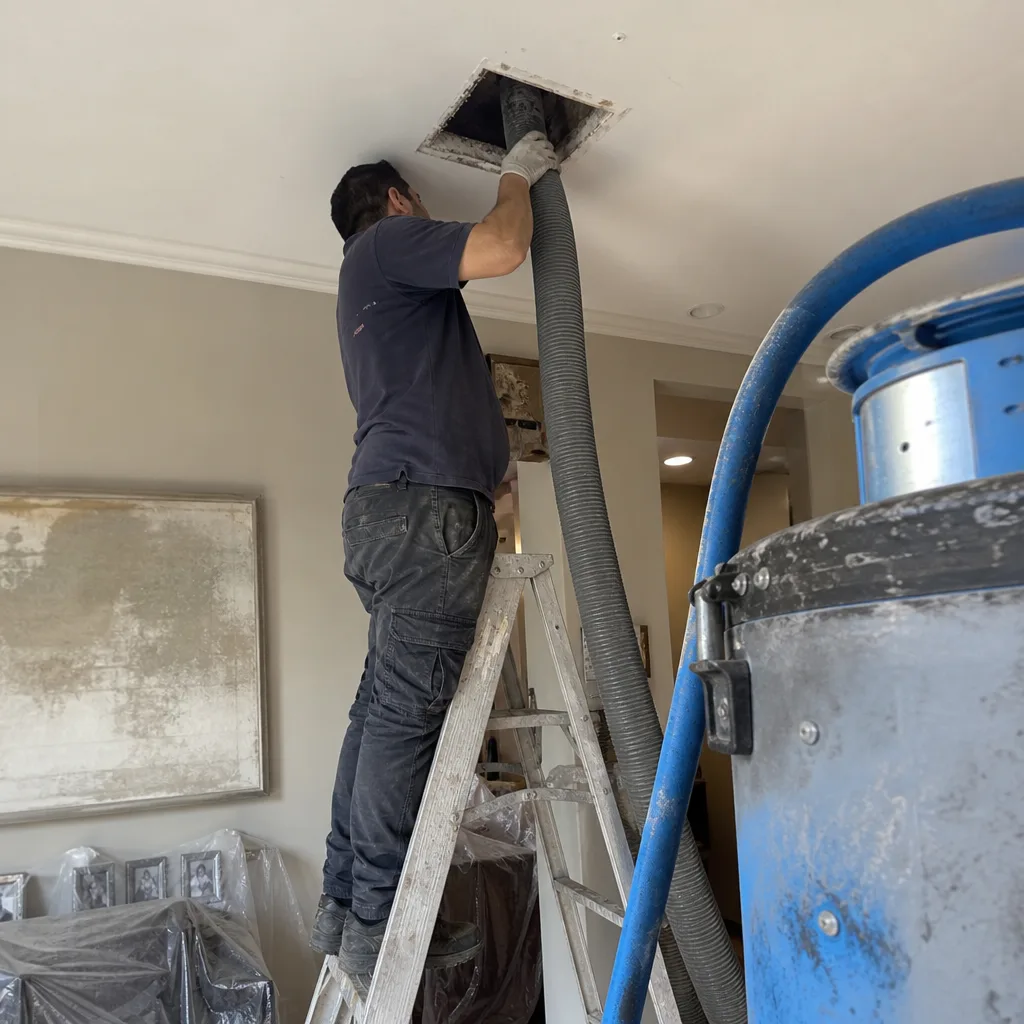
This is the gap professional equipment is built to close. A Rotobrush contact-vacuum system uses a flexible rotary brush on a whip that travels the length of a run while a negative-pressure vacuum captures what the brush loosens. A Nikro HEPA-rated machine pulls the fine particulate that a shop vac’s filter simply passes back into the room. Those tools aren’t a marketing upsell. They exist because the reach problem is real.
Our technicians have up to 13 years of experience, and the pattern they describe is consistent. The dust you see on a register is a fraction of what’s sitting mid-run.
The Containment Problem: Why Loosening Debris Can Make Things Worse
This is the risk most DIY guides never mention. Cleaning ducts isn’t only about loosening debris. It’s about capturing it. Those are two separate jobs, and a shop vac does the first one far better than the second.
When you push a hose into a duct and start vacuuming, you disturb settled dust. Some of it goes into the vacuum. A meaningful portion gets pushed further down the run or blown back out through the registers into the room, because there’s no negative-pressure envelope around the work area. You’ve aerated contamination rather than removed it.
Professional work handles this with containment. Abatement Technologies air-containment equipment creates negative pressure so that loosened debris moves toward the capture point instead of into your living space. Contact vacuuming keeps the brush head sealed against the duct wall while it agitates. HEPA filtration on the exhaust side traps the fine particles that a standard vacuum filter misses.
In our experience in Far North Dallas, the homes that call after a failed DIY attempt usually have one thing in common: dust on the furniture got worse, not better, for a week afterward. That’s redistribution, not cleaning. It’s also the main reason a partial job can cost more than doing nothing.
Tool Reality Check: What Matching Pro Equipment Would Cost
Homeowners sometimes ask whether it’s worth buying the equipment. The answer is almost always no, and the breakdown shows why.
- Contact vacuum with rotary agitation. The core tool for cleaning a duct run. This is a specialized piece of equipment, not something sold at a home improvement store, and the price reflects that.
- HEPA-rated high-capacity vacuum. A shop vac with a HEPA filter cartridge isn’t the same class of machine. A true HEPA-rated unit moves high volume at high static pressure, which is what the job demands.
- Flexible whip and brush heads in multiple sizes. Ducts come in different diameters and materials. One brush doesn’t fit all of them.
- Containment equipment. Negative-pressure setup with HEPA filtration on the exhaust.
- Access tools. Cutting and resealing access points at the plenum and trunk, then sealing them so the system stays tight afterward.
The economics don’t work. Even a serious DIY-minded homeowner would be looking at a significant one-time outlay for equipment used maybe once a year, with no training on how to run it inside a duct system without damaging flex duct or knocking a joint loose. That’s before you factor in the repair side – sealing leaks, reconnecting joints, replacing damaged sections – which is part of the professional scope and a separate skill set entirely.
This is why air duct cleaning is priced per system rather than per vent. The equipment is the bulk of the cost, and it’s the reason the job gets done right.
Far North Dallas Factors That Change the Calculation
Every housing market and climate shifts the DIY-versus-pro math a little. In Far North Dallas, a few local realities push toward professional cleaning more often than a homeowner might expect.
Newer subdivisions with flex duct. A lot of the housing stock in Far North Dallas was built in the last few decades, and much of it uses flexible duct in the attic. Flex duct sags. Sagging runs collect debris at the low points and trap it there. It also damages more easily than rigid duct, so aggressive DIY work risks tearing the liner. Professional cleaning handles flex duct with lower-pressure methods designed for it.
Long cooling season. North Texas runs the air conditioning for a large part of the year. A system that runs constantly moves a lot of air, which means it also moves a lot of dust and loads the filter faster. More runtime means more debris accumulation per year than in a milder climate. Homes here tend to need cleaning on the shorter end of the usual interval.
New construction and renovation dust. Far North Dallas sees steady renovation activity, and drywall dust is uniquely bad for ductwork. It’s fine enough to pass through a filter, it settles everywhere, and it doesn’t come out with a shop vac. If a Far North Dallas home has been renovated, professional cleaning afterward is close to mandatory rather than optional.
Allergy-sensitive households. Pollen in North Texas is a genuine seasonal burden. A household with allergy sufferers gets more value from clean ducts and a proper filtration setup than most, and that’s where equipment-grade cleaning and filter upgrades pay off together. We can supply and install Honeywell and Aprilaire filtration products, which is the other half of the air quality equation.
Attic heat and duct sealing. Ducts running through a hot attic lose efficiency at leaky joints. Sealing those joints is part of the complete job, and it’s not something most homeowners can do safely in an attic. The HVAC cleaning side of the work covers the air handler and coil, which is another area that needs proper access and containment.
None of this means every Far North Dallas home needs professional cleaning right now. It means the local conditions make the professional side of the calculation a little stronger than a generic national guide would suggest.
The Hybrid Approach: DIY Between Professional Cleanings
This is where most homeowners land once they understand the split, and it’s a good place to be. Do the surface work yourself on a schedule. Bring in commercial-grade equipment when the system actually needs it. Here’s the routine that makes it work.
- Monthly: Check the filter. In Far North Dallas, during peak cooling months, a filter can load up faster than the typical replacement interval suggests. If it’s gray and matted, replace it early.
- Every three to four months: Pop the register covers, wash them, and wipe the return grille. Vacuum the filter housing with a brush attachment.
- Twice a year: Clean the dryer vent lint at the back of the dryer and behind the flex section. Check that the exterior vent flap opens freely and isn’t packed with lint.
- Annually: Walk the house and look for dust streaks around registers, listen for whistling at supply vents, and check whether any room feels under-served. Those are early signals of duct issues.
- On the professional schedule your home needs: Book a full cleaning. In Far North Dallas, most homes fall in a range of roughly every three to five years, shorter after renovation or in allergy-sensitive households.
This split gets you the most out of both approaches. The DIY work is genuinely useful, and it keeps the professional cleaning interval longer. The professional work reaches what you can’t. Neither replaces the other.
One more piece: dryer vent cleaning is a named service on its own, and it’s the one duct-adjacent task where the DIY ceiling matters most. You can reach the back of the dryer. You can’t reach the run inside the wall or the exterior termination, and that’s where lint accumulates and creates real fire risk. A dedicated dryer vent cleaning handles the full run.
How to Evaluate a Professional Duct Cleaning Quote
If you’ve decided to book professional work, the quote is where the industry’s worst habits live. A few questions separate a real cleaning from a coupon that grows into a bigger invoice once the technician is on site.
- Ask what equipment they use. If the answer is a shop vac and a hose, that’s not duct cleaning. Contact-vacuum systems and HEPA-rated machines are the baseline.
- Ask whether the price is per system or per vent. Per-vent pricing encourages skipping the runs that are hardest to reach. One flat price per system, agreed before work starts, is the honest structure.
- Ask to see before-and-after photos of your own ducts. Not stock photos. Yours. Any reputable company will document the work.
- Ask whether repair and sealing are part of the scope. Cleaning ducts with leaky joints means cleaning them again sooner. Sealing in the same visit is the complete job.
- Ask about the brand names. Rotobrush, Nikro, Abatement Technologies, Honeywell, Aprilaire, and Guardsman are named for a reason: they’re industry-recognized equipment and products. Specific brand names are a useful signal that the company isn’t hiding behind generic language.
- Ask what happens after cleaning. Sanitizing with Guardsman-grade treatments after cleaning extends the air quality benefit and addresses microbial growth, which is a different job from removing dust.
You can read more about how we approach the work on our air duct cleaning Far North Dallas page, including the full scope from vent cover to air handler.
Common Mistakes to Avoid
- Pushing a shop vac deep into a run without containment. You’ll loosen debris you can’t capture, and it redistributes into the room. If you can’t run negative pressure, don’t go past the first few feet.
- Using a brush that’s too aggressive on flex duct. Flex duct has a thin liner that tears easily. A stiff brush on a long whip can damage it, and repaired flex duct is never quite the same.
- Skipping the return side. The return moves more air and collects more dust than any supply. Homeowners clean the supply registers and ignore the return, which is where most of the visible dust originates.
- Buying the highest-MERV filter on the shelf. A filter that’s too restrictive for your blower reduces airflow, stresses the system, and can cause coil icing. Match the filter to the equipment.
- Assuming a coupon price covers the whole system. A very low quoted price often covers a partial job, with the rest added on site. Ask for the full scope in writing before anyone arrives.
- Cleaning ducts without fixing leaks. Cleaned ducts with leaky joints pull attic dust back in immediately. Sealing and cleaning belong in the same visit for Far North Dallas homes with attic runs.
- Overlooking the dryer vent. Duped as a minor item, the dryer vent run is a leading cause of household fire. DIY covers the back of the dryer. The rest needs dedicated cleaning.
When to Call a Professional
Call a professional if any of these apply: you’ve just finished a renovation or moved into a recently renovated Far North Dallas home; dust is visibly blowing from supply vents when the system starts; you see dust streaks around register frames or along attic duct runs; a room is consistently under-served; someone in the house has significant allergies or asthma; the filter loads up faster than expected; or the dryer takes noticeably longer to dry a load. All of these point to a job that’s beyond the DIY reach limit.
Air Duct Cleaning Far North Dallas offers free estimates in Far North Dallas. Call (877) 792-7498. We answer 24/7, and fast dispatch runs from 7am to 7pm, Sunday through Friday. The price is set per job by the written estimate, and we document the work with before-and-after photos of your own ducts. The local pro is licensed and insured as their state requires.
Frequently Asked Questions
Most residential duct cleaning jobs in Far North Dallas fall within a range determined by the number of runs, the system size, and whether repair or sealing is involved. We set one flat price per system by written estimate, agreed before any work starts, and the estimate is free. Per-vent pricing can look cheaper on a coupon but rarely covers the full system. Call (877) 792-7498 for an exact quote – estimates are free.
For now, yes, if the system hasn’t been cleaned in a while and there are no warning signs. Register washing, return grille cleaning, and filter changes are genuinely useful DIY tasks. What they don’t do is reach mid-run debris, the plenum, or the coil. If you haven’t had a full cleaning in several years, or you’ve renovated, DIY surface work won’t substitute. Call (877) 792-7498 to book an estimate and get a straight answer on what your system actually needs.
Very low quotes typically cover a partial job, use consumer-grade equipment, or price per vent so most of the system gets skipped. A full-system cleaning with contact-vacuum and HEPA equipment, containment, and sealing is a different scope. Ask what equipment the company uses and whether the price is per system or per vent before you book. Call (877) 792-7498 to compare an honest full-scope estimate.
Before-and-after photos of your own ducts are the simplest answer. A company that documents the work will show you what came out and what the runs look like after. Physical access points that have been opened and resealed are another sign. We photograph every job. Call (877) 792-7498 to ask about documentation and get your estimate.
Most Far North Dallas homes land somewhere between every three and five years, and the interval runs shorter after renovation, in allergy-sensitive households, or where flex duct runs through a hot attic. Homes with pets and heavy cooling-season runtime tend toward the shorter end. Your own filter-loading pattern is a useful signal. Call (877) 792-7498 to talk through your home’s specifics – estimates are free.
We handle dryer vent cleaning as a dedicated service alongside duct cleaning, so the full air pathway gets covered in one visit. That means ductwork, the air handler side, duct sealing, and the dryer vent run all in the same appointment rather than three calls to three companies. Call (877) 792-7498 to book it.
Yes. We’re authorized to supply and install Honeywell and Aprilaire filtration products, which lets you upgrade the filter setup rather than just cleaning what’s already in place. Upgrading filtration is often the highest-value step for allergy-sensitive households. Call (877) 792-7498 to ask what fits your system.
The Bottom Line
DIY air duct cleaning has a real, defined scope: register covers, return grilles, filter changes, and the lint you can reach behind the dryer. Beyond that, the limits are physical, not commercial. Mid-run debris, plenum buildup, and coil surfaces need contact-vacuum agitation, HEPA extraction, and negative-pressure containment, and matching that equipment as a homeowner doesn’t pencil out. In Far North Dallas, longer cooling seasons, a lot of flex duct, and steady renovation activity push more homes toward professional cleaning on a shorter interval. The best result comes from doing the surface work yourself between professional cleanings and bringing in the right equipment when the job calls for it. One flat price per system, agreed before work starts, and before-and-after photos: that’s the structure to ask for.
If you want a straight answer on what your Far North Dallas home actually needs, call (877) 792-7498 for a free estimate. We answer 24/7. Fast dispatch from 7am to 7pm, Sunday through Friday. Clean ducts, sealed ducts: the complete job.
Written by the team at Air Duct Cleaning Far North Dallas.
See the difference
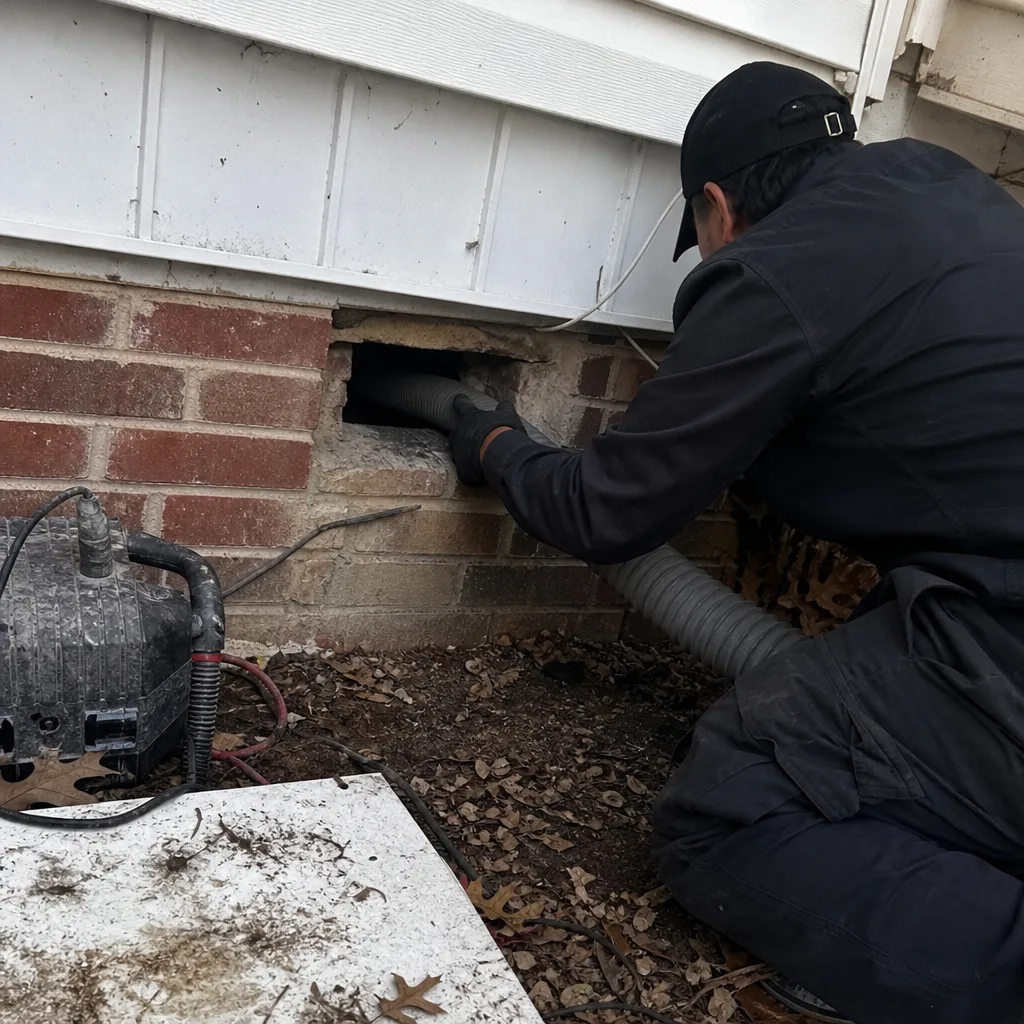 Before
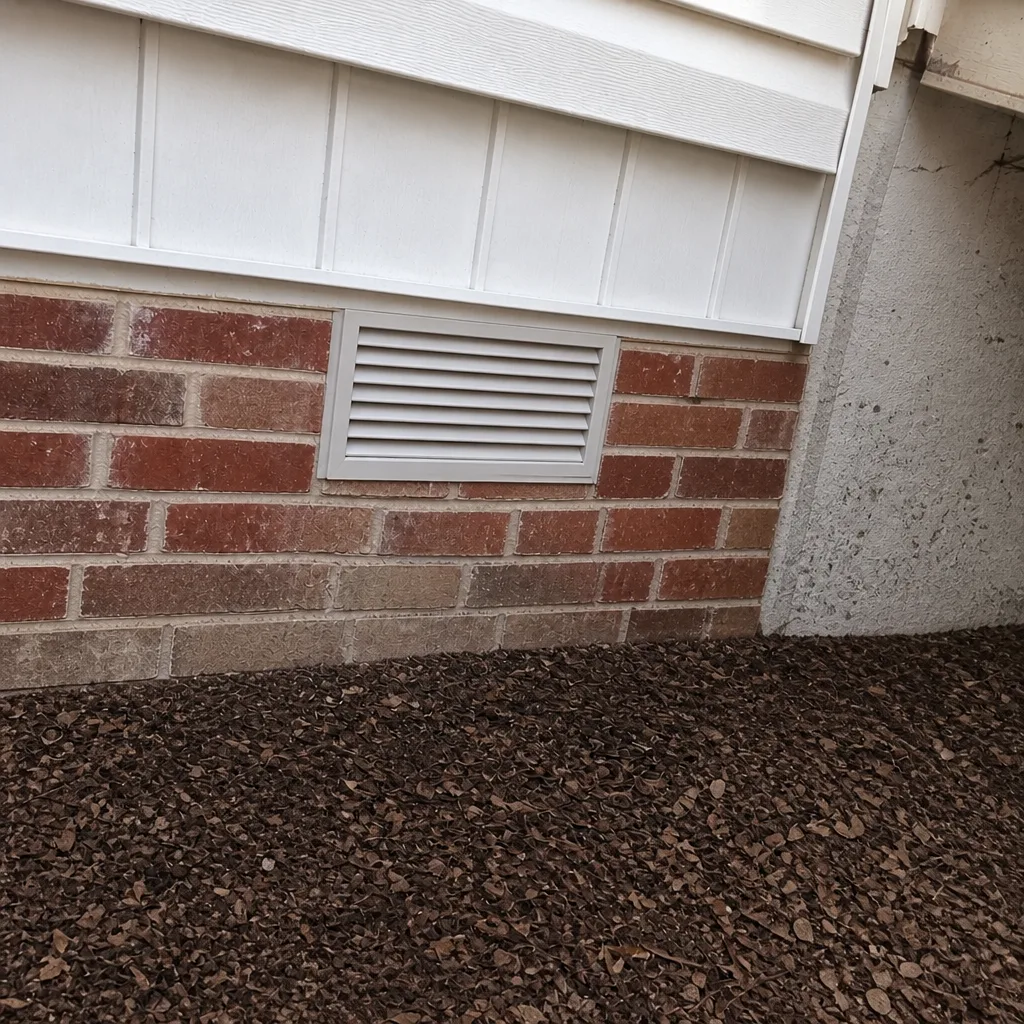 After
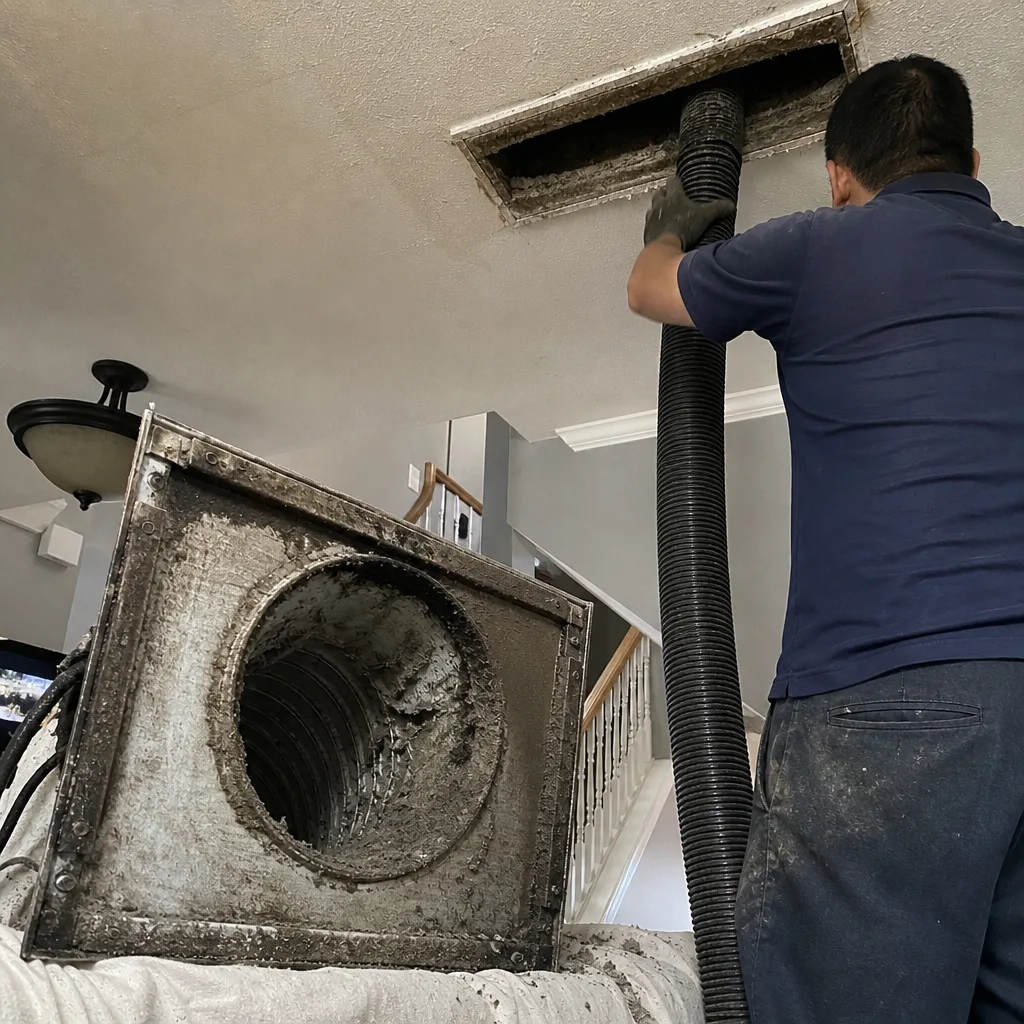 Before
 After
 Before
 After