
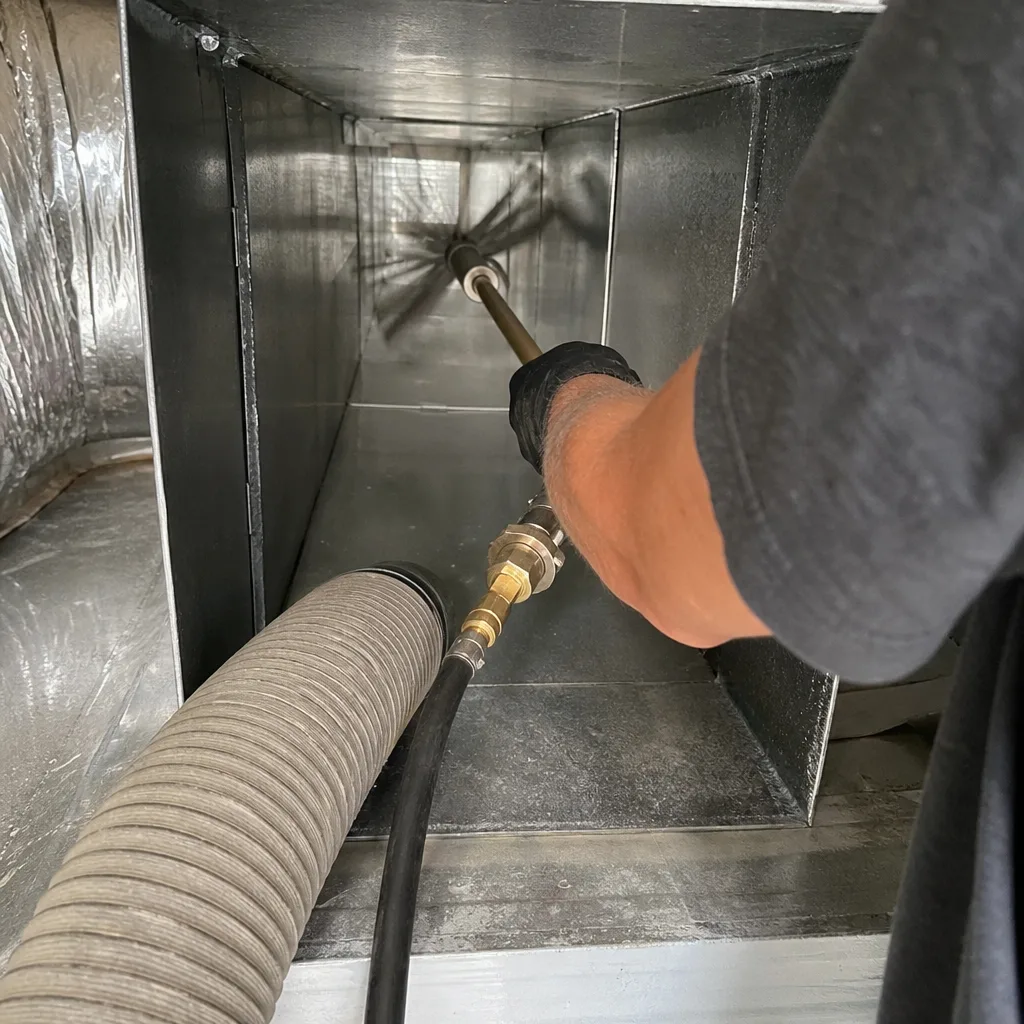
Last updated November 23, 2026
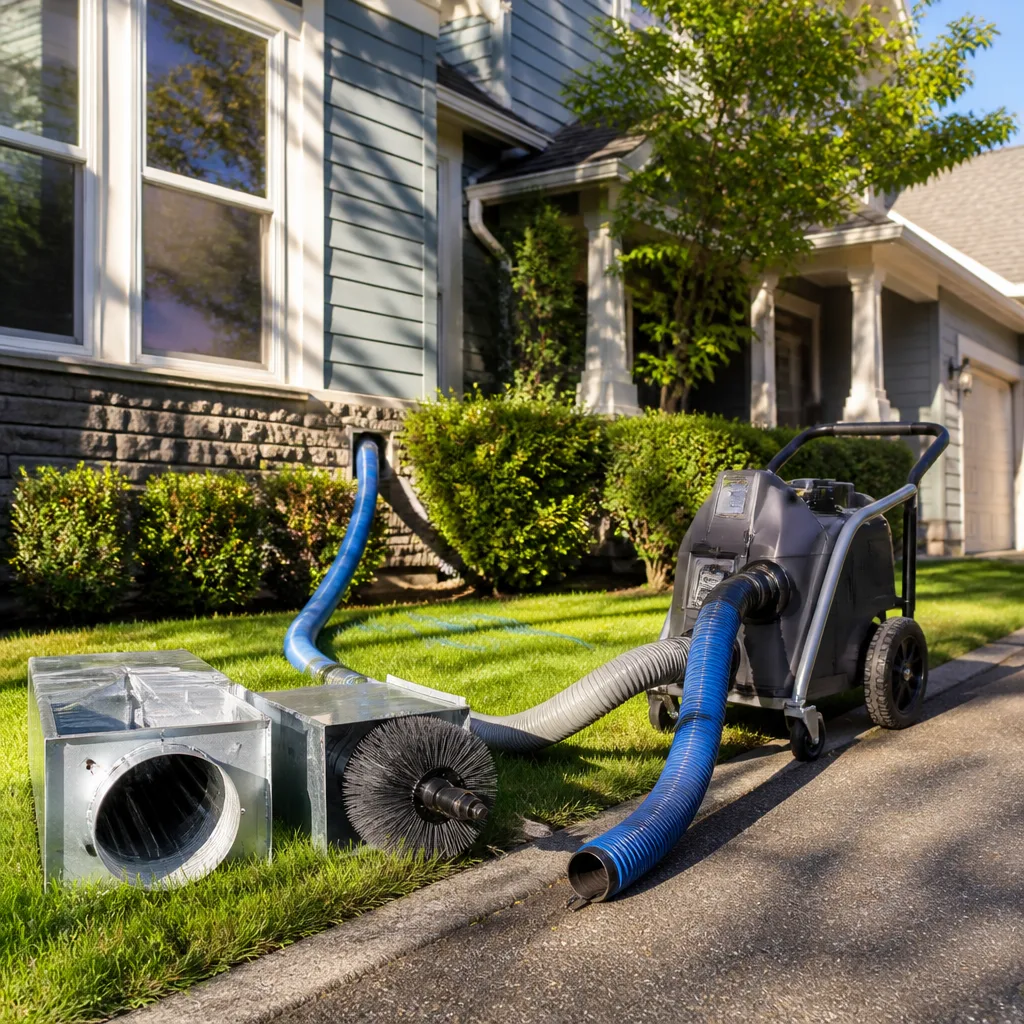 Whole-home duct cleaning
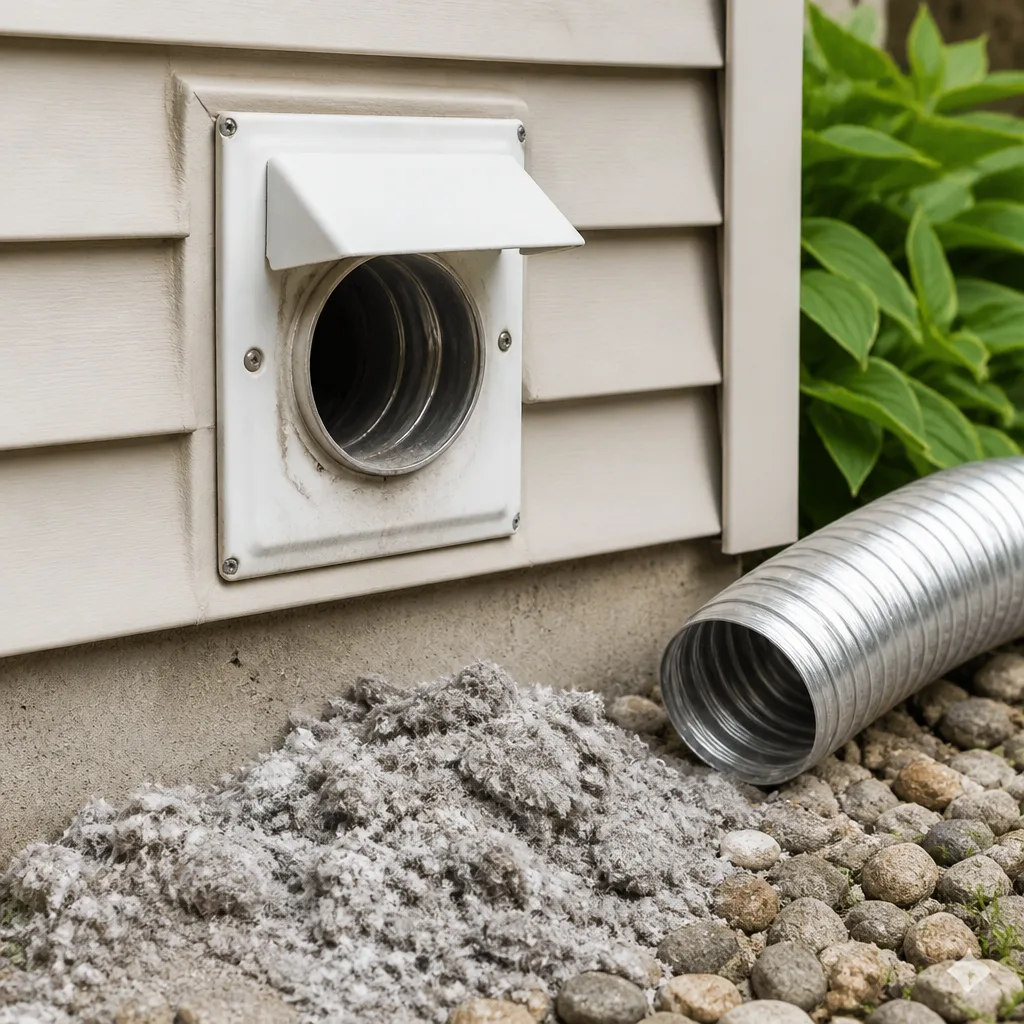 Dryer vent cleaning
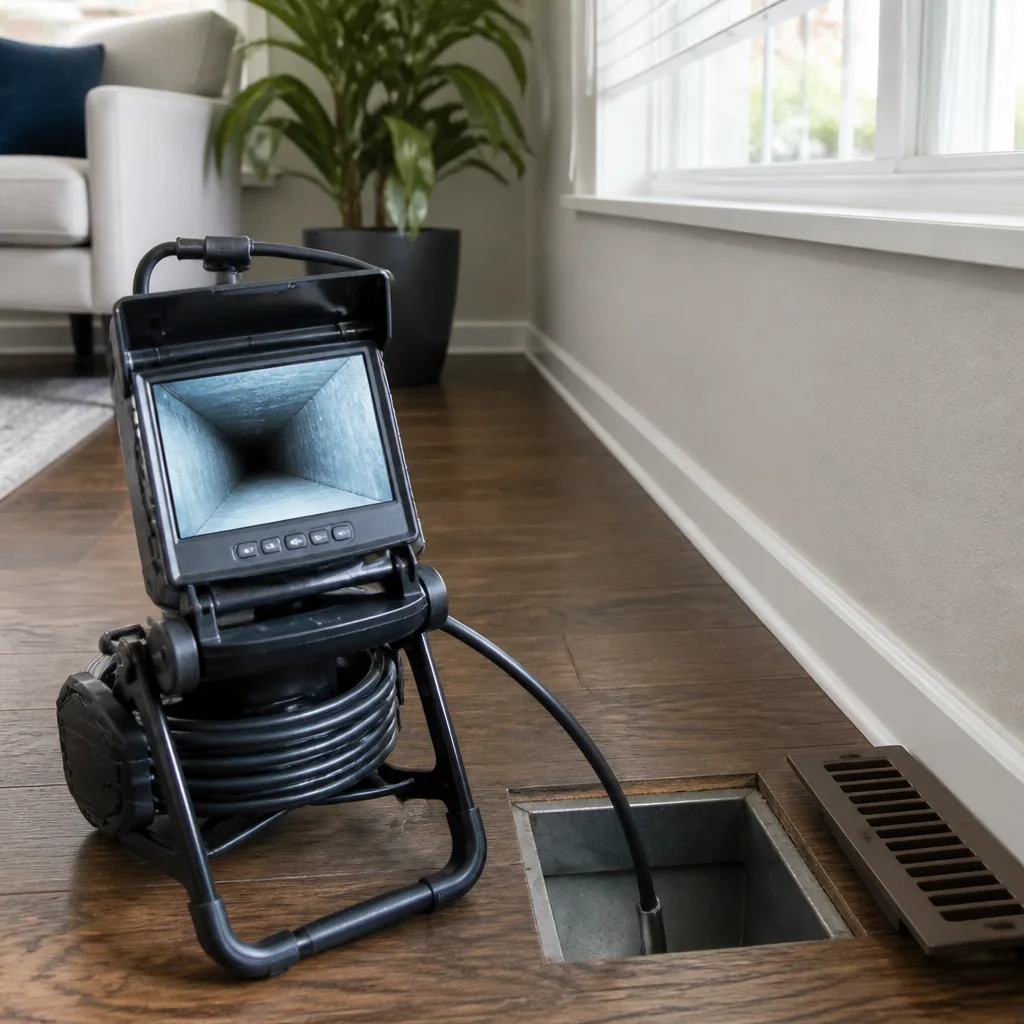 Camera inspection
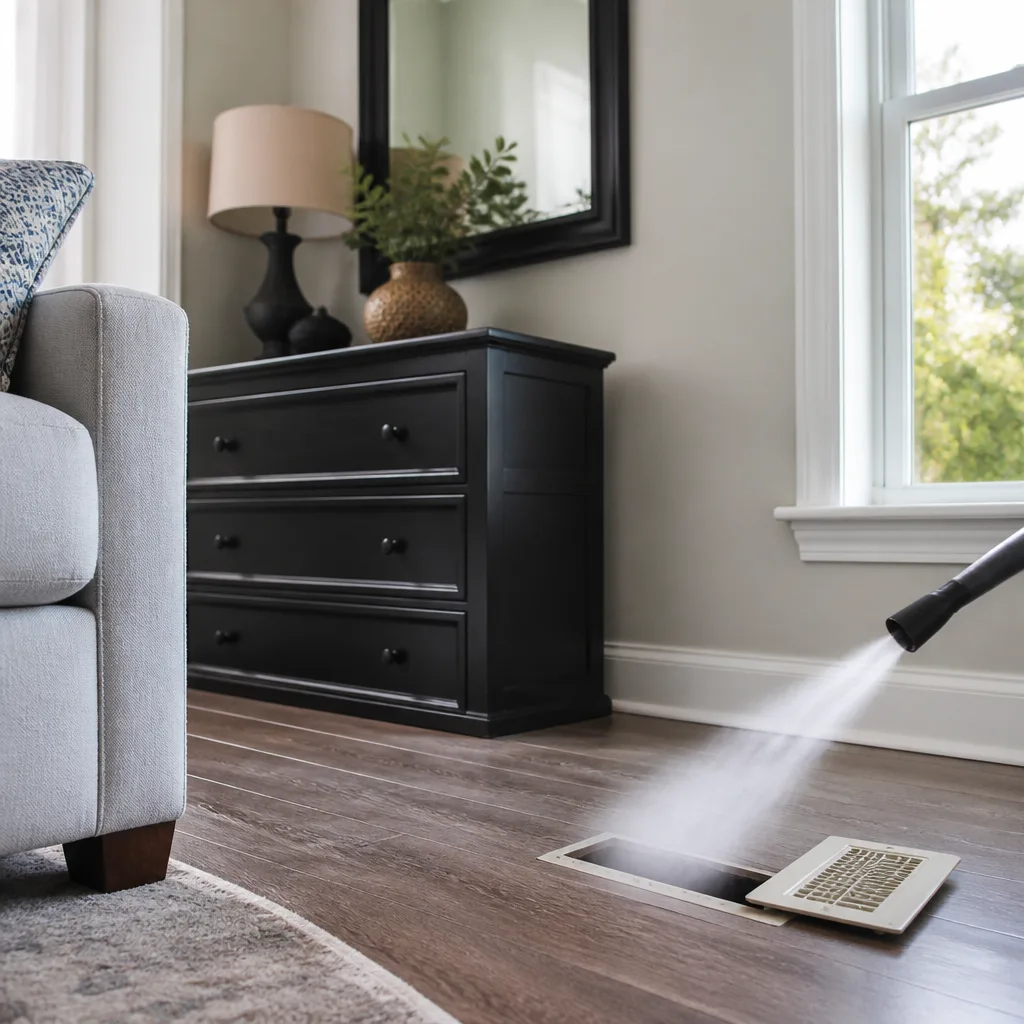 Sanitizing & deodorizing
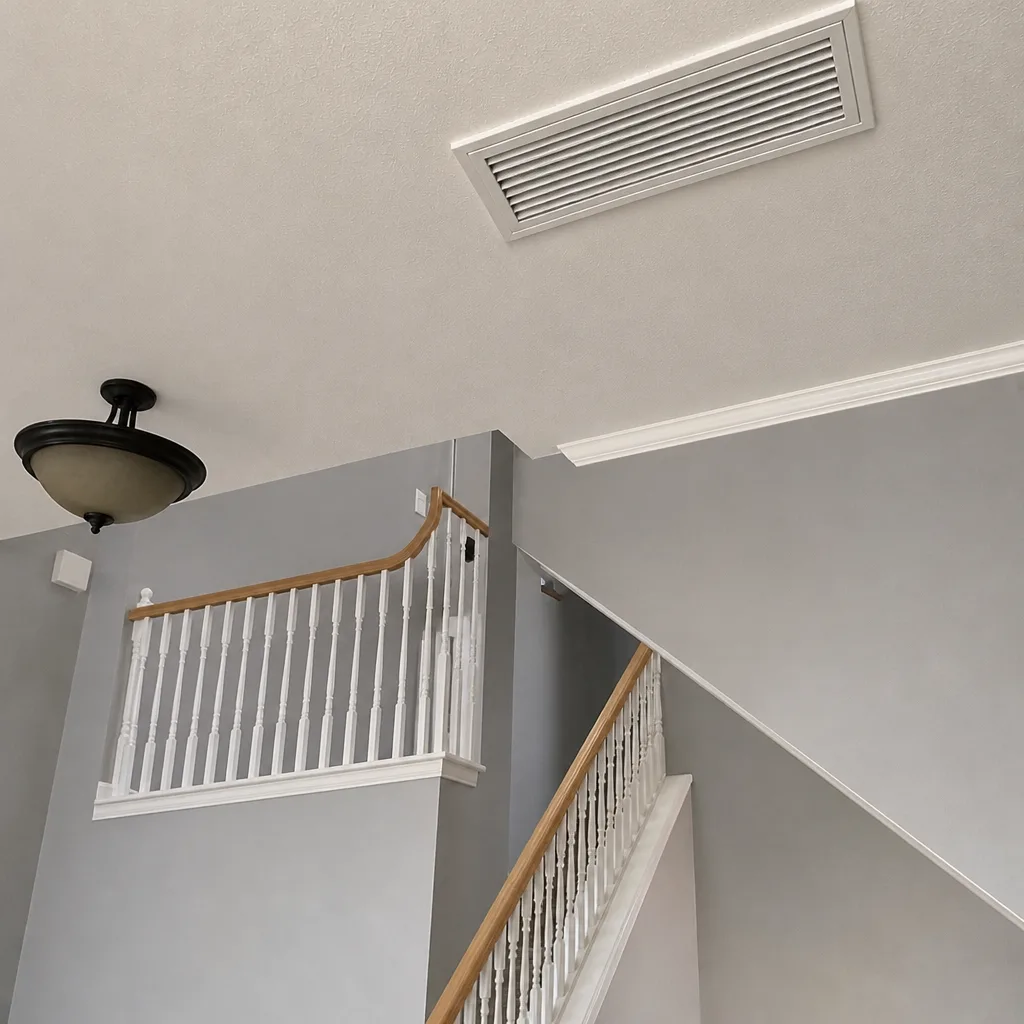
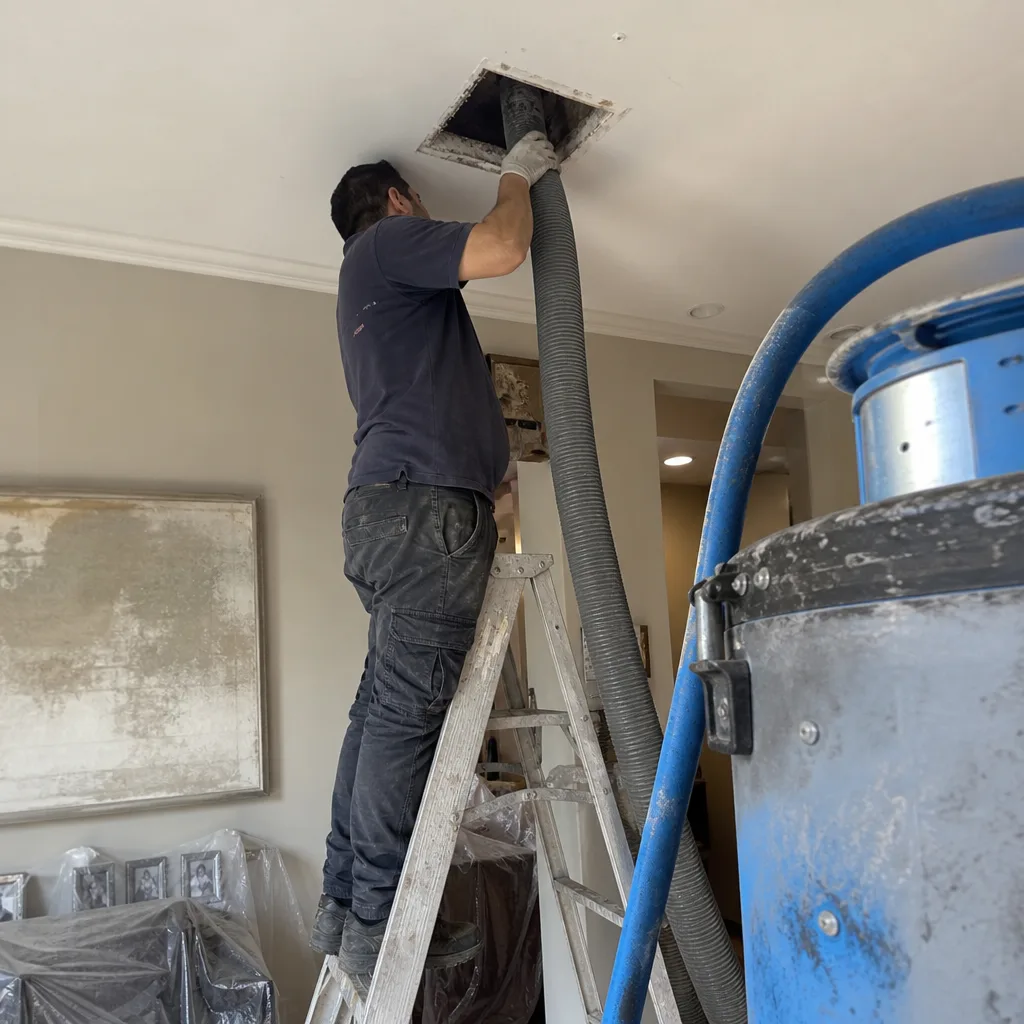
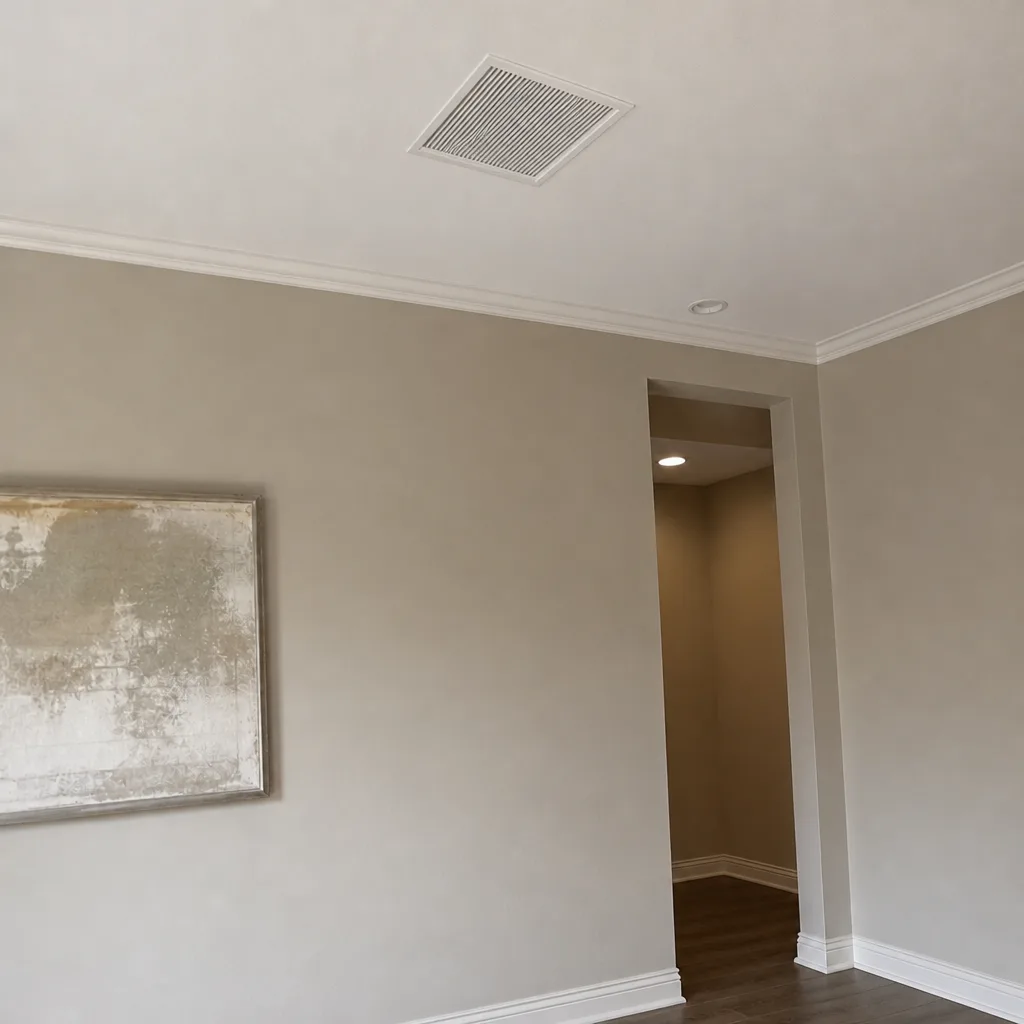
Whole-system duct and dryer vent check with before-and-after photos - you see exactly what came out of your vents
That "$99 whole-house special" is a bait ad - the real number appears once they are in your hallway, or the "clean" is a shop-vac at the register. We photograph the inside of your ducts before and after instead.
Air Duct Cleaning Emergency Preparedness Guide for Far North Dallas Homes
Most homeowners here think of duct cleaning as a maintenance item, something you get around to when the vents look dusty. That thinking is backwards. In Far North Dallas, your duct system is the quiet participant in every regional event that pushes particles into the air: hail storms that open a roof, flash flooding along the creek corridors, and wildfire smoke drifting in from West Texas. Each of those creates a different kind of contamination, and each calls for a different response. This guide covers the protocols for all of them, what to inspect before you run the HVAC again, when cleaning is enough and when it isn’t, and how to prepare before the next storm season starts.
Quick Answer
Emergency duct preparedness in Far North Dallas means three things: knowing how to shut your system down before a storm pushes debris or smoke into it, inspecting for contamination after roof or attic damage and before restarting the HVAC, and calling for professional cleaning after any event that introduces smoke, water, or particulate into the duct network. Smoke events and flood exposure need different responses, and flood-soaked duct systems sometimes need replacement rather than cleaning. Filters alone don’t solve any of these.
Styles & brands we work with
- Whole-home duct cleaning
- Dryer vent cleaning
- Camera inspection
- Sanitizing & deodorizing
Table of Contents
- Why Far North Dallas Ducts Face Three Different Emergency Risks
- Pre-Storm Preparation: Shutoff Protocols and Filter Upgrades
- Hail and Storm Damage Protocol: What to Inspect Before Running the HVAC
- Wildfire Smoke and Regional Air Quality Events
- Post-Flood Duct Response Along the Creek Corridors
- Fire Restoration and Smoke-Damaged Duct Systems
- What Professional Equipment Actually Addresses
- After the Event: A Step-by-Step Recovery Checklist
Why Far North Dallas Ducts Face Three Different Emergency Risks
When wildfire smoke blew into the DFW Metroplex from West Texas fires in recent years, thousands of HVAC systems were actively pulling that particulate through ductwork and depositing it on coils and duct lining. That’s the part most people miss. A house with the air conditioning running during a smoke event isn’t just letting smoke drift in through gaps. Its return side is functioning as a low-grade particulate pump, and the contamination lands where you can’t see it.
Far North Dallas sits at the intersection of three distinct risks, and they don’t behave the same way:
- Severe hail and windstorms. Hail doesn’t usually hit ducts directly. It hits roofs, and a compromised roof deck or attic penetration lets insulation fibers, water, and outdoor debris into the attic space where duct runs are often exposed.
- Flash flooding. The creek corridors and low-lying pockets around Far North Dallas can take on water quickly during heavy rain. When water reaches a crawlspace or an attic-mounted air handler, the duct system can become a wet environment, and wet duct lining is a different problem than dirty duct lining.
- Regional wildfire smoke. Smoke events arrive from hundreds of miles away and don’t announce themselves with flames. They show up as a haze, an air quality alert, and an HVAC system quietly circulating fine particulate through every room.
The common thread: each event deposits something in your duct system that a filter change won’t remove, and each requires a different decision about whether to clean, repair, or in some cases replace. Most homeowners in Far North Dallas have a plan for none of them. This guide is that plan.
Pre-Storm Preparation: Shutoff Protocols and Filter Upgrades
The best time to prepare your duct system for severe weather is before the first storm of the season. A few deliberate steps cut the amount of contamination that gets pulled into the system, and they make any post-event cleanup faster and less expensive.
- Know your shutoff. Locate the breaker or disconnect for your air handler and write it down. During a severe storm or a heavy smoke event, turning the system off stops the fan from moving outdoor particulate into the return and across the coil.
- Seal the obvious openings. Check attic hatches, gaskets around return grilles, and any flex duct connections in unconditioned space. Loose joints are how the system pulls attic air into the supply stream.
- Upgrade filtration where the system allows. A higher-MERV filter captures more fine particulate, but only if your air handler can handle the added static pressure. We carry and install Honeywell and Aprilaire filtration products, and the right choice depends on your equipment, not on buying the highest number on the box.
- Schedule a duct inspection before storm season. A system with failing duct tape, disconnected flex runs, or crushed sections will pull in far more contamination than a sealed one. Repair and sealing done ahead of time pays off during the season.
- Trim and secure the attic. Loose items near roof penetrations become projectiles in high wind. Keeping that space clear reduces the chance of a manual puncture during a hail event.
If you’ve had your system inspected in the last few years, you probably know your weak points already. If not, an air duct cleaning visit is a reasonable moment to have someone look at duct integrity while the system is open, because a cleaning that ignores a leaking joint just re-contaminates afterward.
Hail and Storm Damage Protocol: What to Inspect Before Running the HVAC
After a hail or windstorm, the instinct is to flip the thermostat back on and check whether the AC works. Don’t. Run the inspection first, because the question isn’t whether the system turns on. It’s whether the system will pull in water, insulation, or attic debris the moment it does.
Work through this before you run the HVAC:
- Look at the attic from below and above. Water stains on ceiling drywall near duct runs, wet insulation around roof penetrations, and daylight through the roof deck all point to moisture that may have reached ductwork or the air handler cabinet.
- Check flex duct for punctures and disconnections. In Far North Dallas homes with attic-mounted duct runs, hail-driven wind can shift insulation or knock loose a poorly secured connection. A disconnected supply run dumps conditioned air into the attic and pulls attic air into the house.
- Inspect the air handler cabinet for standing water. A wet coil or a wet cabinet interior means the system needs to dry out fully before it runs again, and it may need a professional assessment first.
- Watch for insulation fibers in the supply vents. If you see fibrous debris at the registers after a storm, the duct system has likely taken in attic material and needs cleaning rather than another filter.
- Photograph everything before you touch it. If the damage leads to an insurance conversation, a documented condition helps.
If everything checks out dry and intact, run the system normally and monitor for unusual smells or visible debris at the vents over the next few days. If you find water or insulation intrusion, stop and call. For systems that have taken on moisture, we can work with your insurer on the documentation side, and we handle duct repair and sealing alongside cleaning so a repaired system doesn’t get re-contaminated on the next run.
Wildfire Smoke and Regional Air Quality Events
Wildfire smoke events are the most deceptive of the three risks because the house still feels normal inside. The air quality alert is regional, the sky looks hazy, and the HVAC runs exactly as it always does, pulling outside air and fine particulate across coils and into duct lining. The deposits are largely invisible, but they build up over the days a smoke event lasts.
During an event, your job is to minimize infiltration:
- Run the system on recirculation with the fan on low or off. Closing the fresh-air intake, if your system has one, reduces the smoke the system draws in.
- Keep windows and exterior doors closed. This sounds obvious, but in mild Far North Dallas weather the temptation to air the house out is real, and it undoes the point.
- Change the filter after the event, not during it. A filter loads up fast in heavy smoke and can choke airflow. Check it when the air clears and replace it then.
- Watch for soot odor or a persistent smoke smell indoors. If the smell lingers after the outdoor air clears, particulate has settled in the duct system or on the coil, and a filter swap won’t remove it.
After the event, the cleanup is a cleaning and sanitizing job, not a filtration job. We clean the full air pathway and apply Guardsman-grade sanitizing treatments to address what’s left behind, then confirm the coil and cabinet are clear. Smoke deposits on a wet coil can also reduce heat transfer, which shows up later as a system that runs longer than it used to. Air quality you can measure, not just feel, is the standard we work to here. If you want the system assessed after a smoke event, our HVAC cleaning service covers the coil, cabinet, and air handler along with the ductwork.
Post-Flood Duct Response Along the Creek Corridors
Flash flooding is a Far North Dallas reality in the low-lying areas and along the creek corridors, and when water reaches a home’s crawlspace or the attic air handler, the duct system can go from dirty to wet very quickly. Wet duct lining is a different category of problem than dust and debris. Porous lining that has absorbed water and stayed wet can support microbial growth, and once that has happened, cleaning the surface doesn’t restore the material.
The decision tree looks like this:
- Ductwork got splashed but dried quickly and is intact. Cleaning and sanitizing is usually appropriate once the system is fully dry.
- Flex duct or lined rigid duct absorbed water and stayed wet for more than a short period. Replacement is often the right call, particularly for porous interior lining that can’t be dried out fully.
- The air handler cabinet took on water. The cabinet, coil, and any insulation inside need professional assessment before the system runs again.
- You can smell mustiness when the system runs after a flood event. That’s a signal to have the system inspected rather than to keep running it and hope it clears.
If a flood event has reached your duct system, don’t run the HVAC to “dry it out.” Running a wet system spreads moisture and any growth through the entire air pathway. We use Abatement Technologies air-containment systems for remediation-level work, and we handle duct repair and sealing in the same visit so that any section we clean isn’t left leaking into a wet attic. For a Far North Dallas home that flooded once, a pre-season inspection is worth having on the calendar.
Fire Restoration and Smoke-Damaged Duct Systems
A house fire, even a contained one, leaves a smoke residue problem that standard duct cleaning doesn’t fully address. The residue isn’t just soot sitting on surfaces. Combustion byproducts settle on duct lining, coil fins, and the interior of the air handler, and some of it is oily and clings in a way that a shop vac won’t lift cleanly. It also carries odor that returns whenever the system runs.
What fire restoration work requires that standard cleaning doesn’t:
- Containment. Smoke residue disturbed without containment spreads through the home. Abatement Technologies containment equipment keeps the work area controlled so the cleaning process doesn’t become a second contamination event.
- HEPA-rated extraction. Nikro HEPA-rated machines capture fine particulate rather than blowing it back into the room.
- Contact vacuuming of every reachable surface. Rotobrush contact-vacuum systems get the residue off duct walls instead of just agitating it.
- Sanitizing after cleaning. Guardsman-grade sanitizing treatments applied after the residue is removed address what remains on the surfaces.
- Post-cleaning verification. Confirming the coil, cabinet, and duct lining are clear, and documenting the before-and-after condition, closes the loop.
If your home has had a fire and you’re working with a restoration contractor, coordinate the duct work with the rest of the restoration sequence. Ducts cleaned before drywall and insulation work are done will just need cleaning again. If a Far North Dallas home is being put back together after a fire, we can time the duct cleaning and sanitizing to the restoration schedule.
What Professional Equipment Actually Addresses
The difference between a duct cleaning that solves an emergency-contamination problem and one that doesn’t usually comes down to equipment and scope. A consumer-grade blower or a shop vac agitates debris. It doesn’t contain it, capture fine particulate, or clean the full air pathway. Here’s what the professional-grade equipment actually does in an emergency-response context:
- Rotobrush contact-vacuum systems put a rotating brush and vacuum in contact with duct walls, lifting deposits that a blower leaves behind. This matters most after smoke or flood events where residue clings.
- Nikro HEPA-rated machines capture fine particulate at the machine rather than recirculating it into the room. Smoke and post-fire residue are exactly the materials you don’t want re-aerosolized in a home.
- Abatement Technologies air-containment systems hold the work area under control so remediation-level cleaning doesn’t contaminate the rest of the house. This is the same class of equipment used in commercial and remediation work.
- Honeywell and Aprilaire filtration products let us upgrade the system’s filtration after cleaning so the next event doesn’t undo the work. We’re authorized to supply and install both.
- Guardsman-grade sanitizing treatments address what remains on surfaces after cleaning, which is the step that keeps air quality from sliding backward in the weeks after an event.
Our technicians have up to 13 years of experience, and the equipment list above is the reason we don’t treat emergency-adjacent duct work as a one-step job. Cleaning, sanitizing, repair, and sealing all belong in the same visit, and if your filtration needs an upgrade, we carry and install the products. You don’t need to call a second company for the filtration side of the job.
After the Event: A Step-by-Step Recovery Checklist
Every emergency event leaves a different signature, but the recovery sequence follows a consistent logic. Work through these steps in order, and don’t skip the inspection phase.
- Shut the system down if it’s still running. Stop the fan before you inspect. A running system pulls contamination deeper into the duct network while you’re looking at it.
- Document the condition. Photograph any visible damage, water staining, or debris at the vents before anything is touched. This matters for insurance and for the professional who assesses the system.
- Inspect the attic and duct connections. Look for disconnections, punctures, and moisture in attic-mounted ductwork and at the air handler cabinet.
- Change the filter and note its condition. A heavily loaded filter tells you the system took in a significant particulate load during the event.
- Decide whether cleaning or replacement is the right call. Smoke and particulate events almost always call for cleaning and sanitizing. Flood events may call for duct replacement if porous materials stayed wet.
- Book the professional cleaning and sanitizing, and ask for repair and sealing in the same visit. Cleaned ducts left with a leaking joint get re-contaminated on the next run.
- Confirm the result with before-and-after photos of your own duct system. You should be able to see what was removed and what condition the ducts were in when the work finished.
If you’d rather have someone walk the system with you, we provide a free estimate and a written summary before any work begins. For a broader look at the full-scope work, the Air Duct Cleaning Far North Dallas service page covers the whole air pathway, and for the fire-risk side of the system, dryer vent cleaning is worth having on the same visit schedule.
See the difference
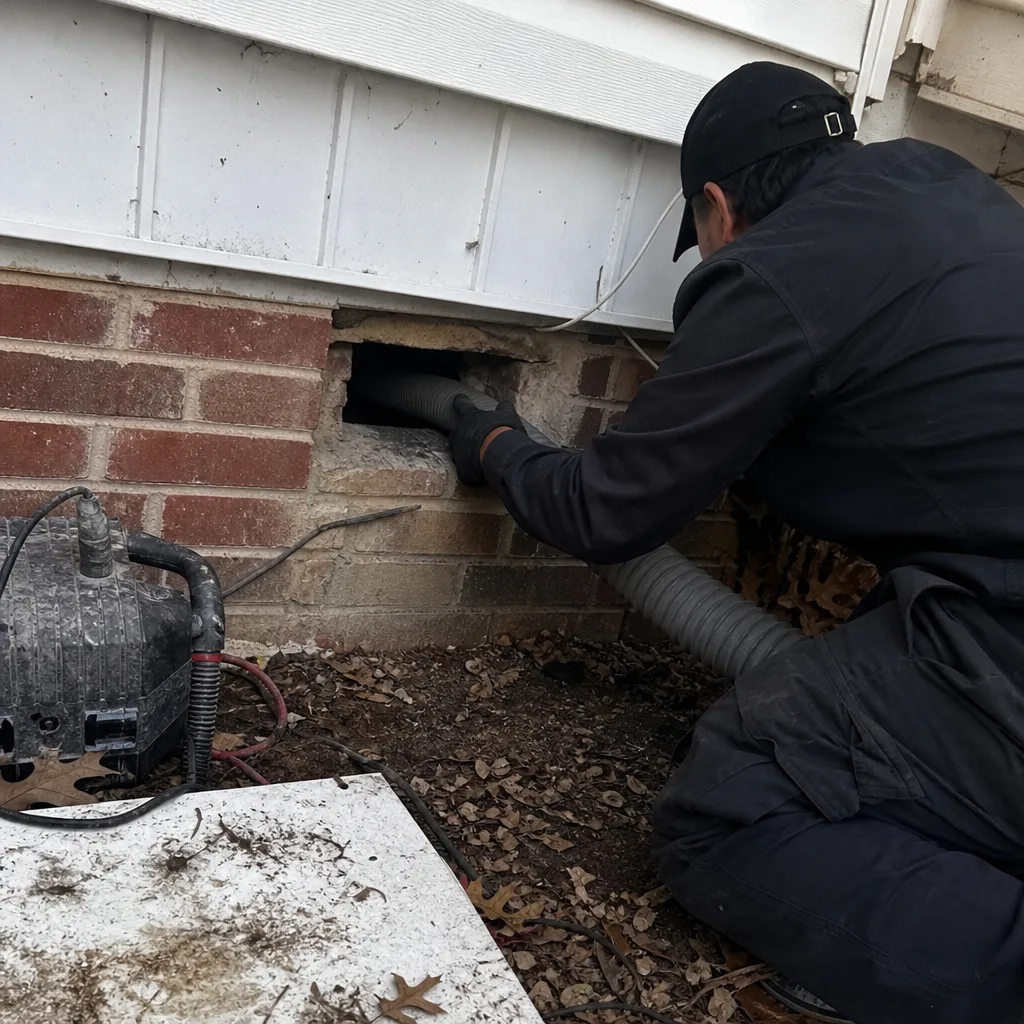 Before
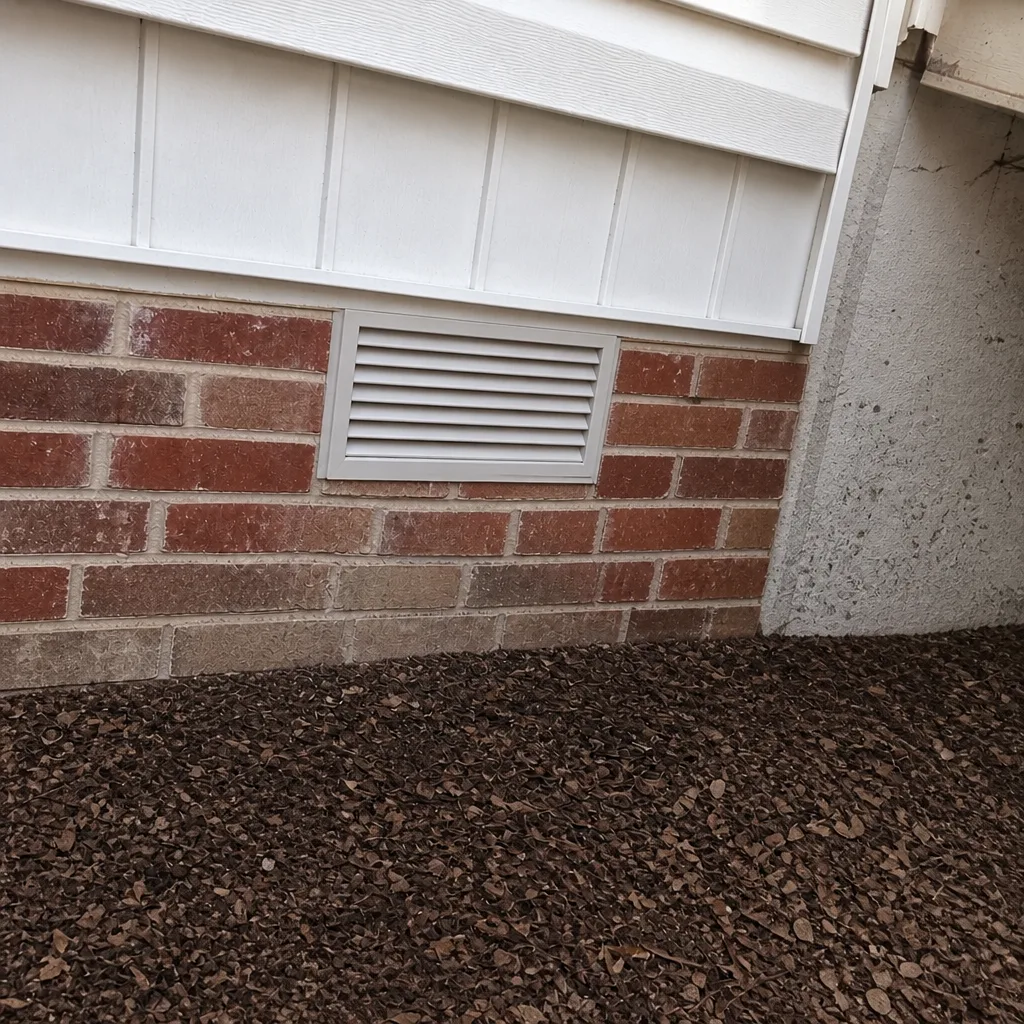 After
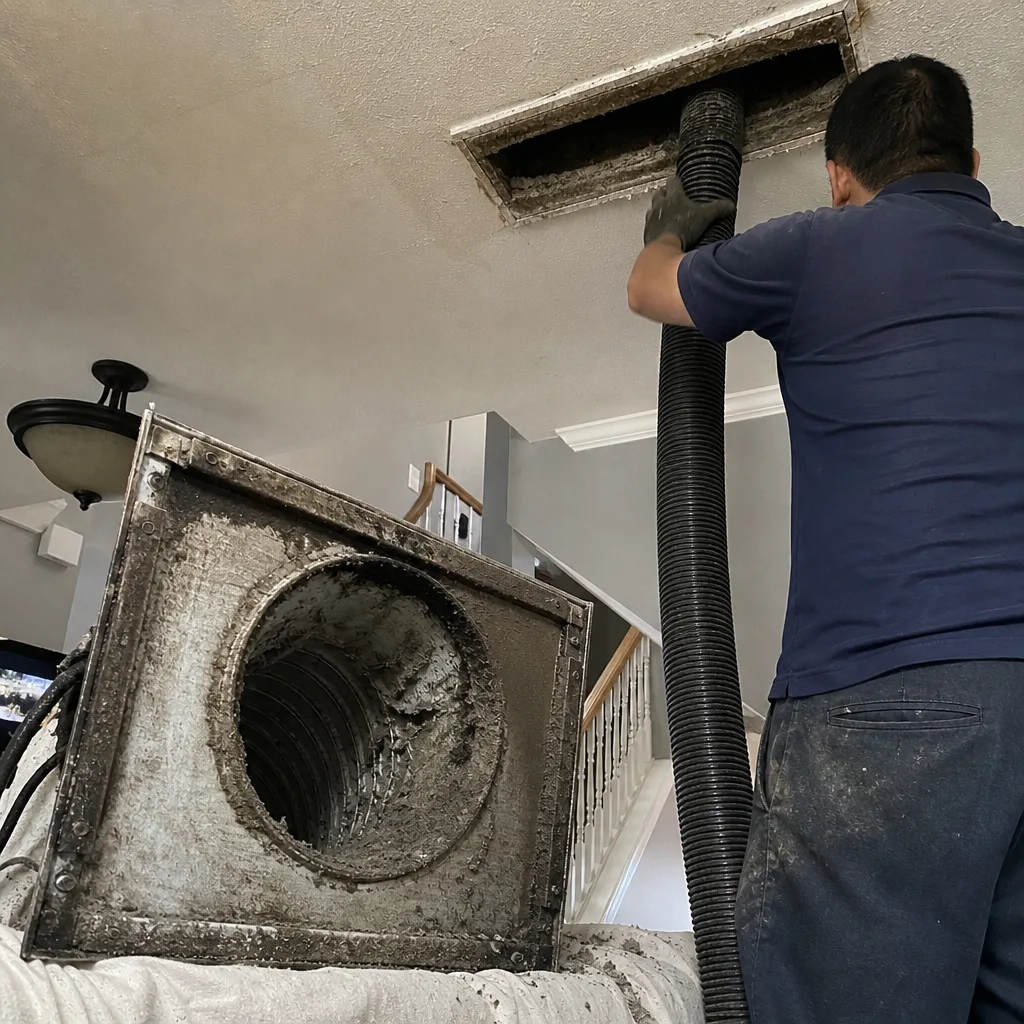 Before
 After
 Before
 After
Common Mistakes to Avoid
- Running the HVAC to “clear the air” after a storm. That’s the opposite of what you want. The fan pulls attic air, insulation fibers, and outdoor particulate into the return side. Shut it off, inspect, then decide.
- Assuming a filter change solves a smoke event. A filter catches what passes through it. It doesn’t remove what already settled on the duct lining and coil. Smoke events call for cleaning and sanitizing after the air clears.
- Cleaning wet duct lining and calling it done. In a flash-flood event, porous lining that stayed wet may need replacement rather than cleaning. Cleaning a wet system spreads moisture rather than removing it.
- Cleaning ducts before the repair work is finished. After a hail or fire event, cleaning a duct system before roof, insulation, or drywall work is complete means the cleaned ducts get re-contaminated. Sequence the work correctly.
- Accepting a quote without a scope in writing. A per-vent price with no scope lets the final invoice grow once the technician is on site. One flat price per system, agreed before work starts, is what we work to, and you should be able to see before-and-after photos of your own ducts when the job finishes.
- Skipping the pre-season inspection. Far North Dallas storm season doesn’t wait for your schedule. A system that’s sealed and inspected before the season pulls in far less contamination than one with loose joints and disconnected runs.
- Treating the dryer vent as a separate, lower-priority item. Dryer vent cleaning addresses one of the leading household fire risks, and it’s easy to fold into the same visit as duct work rather than scheduling it separately later.
When to Call a Professional
Call a professional after any event that may have introduced smoke, water, or attic debris into the duct system, and call before restarting the HVAC if you find moisture at the air handler, disconnections in attic ductwork, or fibrous debris at the supply registers. Call after a wildfire smoke event if a smoke odor lingers indoors once the outdoor air clears. Call after a flood event if you smell mustiness when the system runs, and don’t run the system to dry it out. And call when duct integrity is in question, because a cleaning that ignores a leaking joint gets undone by the next run. If you’re in a Far North Dallas home and want someone to walk the system with you, Air Duct Cleaning Far North Dallas offers free estimates in Far North Dallas. Call (877) 792-7498. We answer 24/7. Fast dispatch from 7am to 7pm, Sunday through Friday.
Frequently Asked Questions
Yes, if a smoke odor lingers indoors after the outdoor air clears, or if anyone in the home notices irritation when the system runs. A filter change removes what’s passing through the system, not what has settled on the duct lining and coil. Cleaning and sanitizing after the event addresses the deposits. Call (877) 792-7498 for a free estimate.
Yes. Turning the system off during a severe storm stops the fan from pulling attic air, insulation fibers, and outdoor debris into the return side while the roof and attic are under stress. Leave it off until you’ve inspected the attic and duct connections for moisture and damage. If you can’t inspect it yourself, call (877) 792-7498 for an assessment.
No. Running a wet duct system spreads moisture and any growth through the entire air pathway rather than drying it. In a flash-flood event along the Far North Dallas creek corridors, duct lining that stayed wet may need replacement rather than cleaning, and the air handler cabinet needs inspection before it runs again. Call (877) 792-7498 to have the system assessed.
Fire restoration duct work requires Abatement Technologies-class containment equipment, HEPA-rated extraction, contact vacuuming of every reachable surface, and sanitizing after the residue is removed. Standard cleaning doesn’t capture oily combustion residue the same way, and without containment, the residue spreads during cleaning. Call (877) 792-7498 to schedule a restoration-grade assessment.
We price per system, not per vent, and the written estimate sets the final price after we’ve walked the system. Smoke and storm events often call for cleaning, sanitizing, and a repair phase, so the scope varies with the condition of the ducts. Call (877) 792-7498 for an exact quote. Estimates are free.
Ask for before-and-after photos of your own duct system, and confirm what’s included in the written scope before work starts. We work to one flat price per system, and the before-and-after photos show the condition of your ducts at the start and finish. Call (877) 792-7498 if you’d like to schedule an assessment with documentation.
The Bottom Line
Far North Dallas duct systems face three distinct emergency risks (hail and wind, flash flooding in the creek corridors, and regional wildfire smoke), and each calls for a different response. Shut the system down before severe weather, inspect for moisture and disconnections before restarting after a storm, clean and sanitize after smoke events, and expect that flood-soaked porous duct lining may need replacement rather than cleaning. A filter change doesn’t solve any of these on its own. Cleaning, sanitizing, repair, sealing, and filtration upgrades belong in the same visit, and the professional-grade equipment matters as much as the cleaning schedule.
If you’re in a Far North Dallas home and want the system walked with you, call (877) 792-7498. We answer 24/7. Fast dispatch from 7am to 7pm, Sunday through Friday. Estimates are free, the price is set per system by the written estimate, and you’ll get before-and-after photos of your own ducts.
Written by the team at Air Duct Cleaning Far North Dallas.